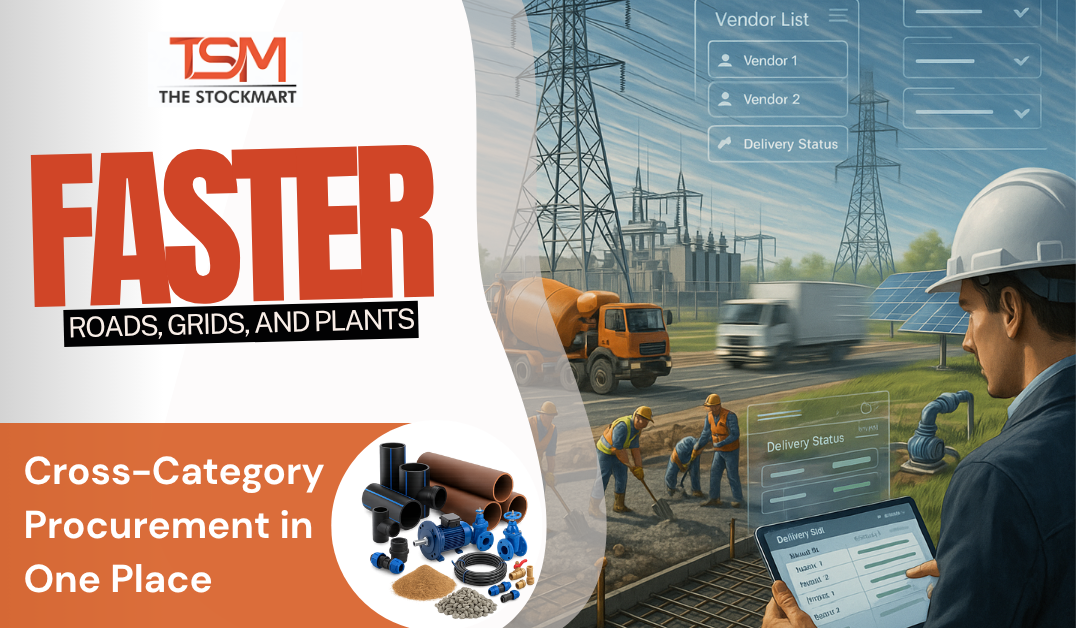
India’s infrastructure momentum—driven by missions like Jal Jeevan, PM Gati Shakti, and Kusum projects—has created unprecedented demand for faster execution of roads, water pipelines, renewable energy systems, and power distribution grids. However, delays in material procurement, vendor coordination, and delivery tracking still slow down progress.
Today, procurement technology—especially B2B digital marketplaces—is transforming how infrastructure companies source, manage, and track material supplies, ensuring faster delivery and better project outcomes.
The Procurement Challenge in Infra: A Fragmented Supply Chain
Traditionally, infrastructure procurement in India has been:
- Highly decentralized, involving 10–15 vendors across regions
- Manual and paper-driven, causing data loss and inefficiency
- Unpredictable, with fluctuating pricing and unreliable delivery
This makes it difficult to manage bulk procurement of:
- HDPE pipes and fittings for water infrastructure
- Solar panels, inverters, and lithium batteries under Kusum Yojana
- Submersible pumps and irrigation valves
- TMT steel bars, fly ash, and aggregates for construction
How Aggregated B2B Marketplaces Are Solving It
B2B procurement marketplaces bring thousands of verified infrastructure suppliers onto a single platform—essentially transforming a clustered, regionalized industry into a streamlined, competitive ecosystem.
These platforms allow procurement managers to:
- Access hdpe pipe manufacturers, submersible pump suppliers, and solar module vendors in one place
- Compare real-time pricing (e.g., TMT bar price today) across multiple sources
- Discover government-approved water connection kits with complete technical documentation
- Order pipes, fittings, pumps, and valves with consolidated logistics and billing
Key Benefits of B2B Marketplaces for Infra Procurement
1. Organized Access to Verified Vendors
- Instant discovery of HDPE pipe suppliers, solar water pump distributors, and automation solution providers
- Vendor verification based on compliance with Jal Jeevan or Kusum tender specs
- Region-wise supplier filtering for faster fulfillment in rural areas
2. Transparent Pricing & Improved Negotiation
- Competitive rates across fly ash bricks, TMT steel, and solar power systems
- Dynamic pricing and alerts for volatile categories like river sand, bitumen, or ductile pipe
- Bulk deal support and seasonal discounts from construction material suppliers
3. Cross-Category Procurement, One Platform
Instead of juggling 15 vendors for pipes, pumps, solar kits, and control valves, project heads can:
- Place unified orders with multiple vendors
- Track deliveries for items like mild steel pipes for construction or solar roof tiles
- Access specs and compatibility checks (e.g., submersible pump for borewell with 1 hp or 2 hp ratings)
4. Faster Delivery via Integrated Logistics
- Real-time delivery updates for house water connection pipe kits
- Stock visibility of fast-moving materials like solar submersible water pumps or approved FHPC kits
- Lead-time planning to avoid costly idle time on-site
5. Digital Documentation & Procurement Compliance
- Automated POs, invoices, and GRNs
- One-click access to compliance docs: batch test reports, e-way bills, and material certifications
- Tender-readiness with category-wise traceability
Why It Matters for Public Infra Projects?
Under government schemes like Jal Jeevan Mission, Kusum projects, and RDSS, delays are not just financial—they impact public service delivery. B2B procurement platforms help:
- Ensure timely installation of solar powered water pumps and GI valves
- Deliver pipes and fittings to remote villages faster
- Maintain documentation for government audits and subsidies
Who Benefits Most from Aggregated Infra Procurement Platforms?
- Infra EPCs executing turnkey road, water, and solar projects
- Procurement heads managing high-volume, multi-category orders
- Discoms and water boards responsible for last-mile rural delivery
- Solar EPCs installing off-grid solar systems, 400 watt solar panels, or 100Ah lithium batteries
- Government implementers in Smart Cities, AMRUT, and PM-KUSUM